Is a Parallel Bioreactor the right choice for your R&D screening workflows?
Launching
While these designations fermentation vessel coupled with fermentation chamber regularly adopted, subsist clear differences among those components. An individual cell vessel generally signifies a plain tank primarily focused on maintaining a suitable environment for microbial cultivation. Fermentation chambers, alternatively, are constructed platforms featuring complex monitoring – like acid-base adjustment, temperature governance, and oxygen supply conveyance. Primarily, a reaction vessel is a improved sophisticated kind of culture vessel designed for precise bioprocessing tasks.
Collective Processing Units: Increasing Biomanufacturing Functionality
Certain developing required quantity for medicinal bioproducts in addition to green energy is catalyzing remarkable improvements involving microbial engineering technique. Multiple reaction systems introduce an persuasive solution intended for expand up creation whilst continuing stable caliber. With operating many replicated growth unit modules during synchronized, fermentation reactions can procure higher performance and augmented process governance, ultimately cutting down on cost and enhancing commercialization.
Cross Flow Filtration System Incorporation: Advancing Bioreactor and Culture Units Yield
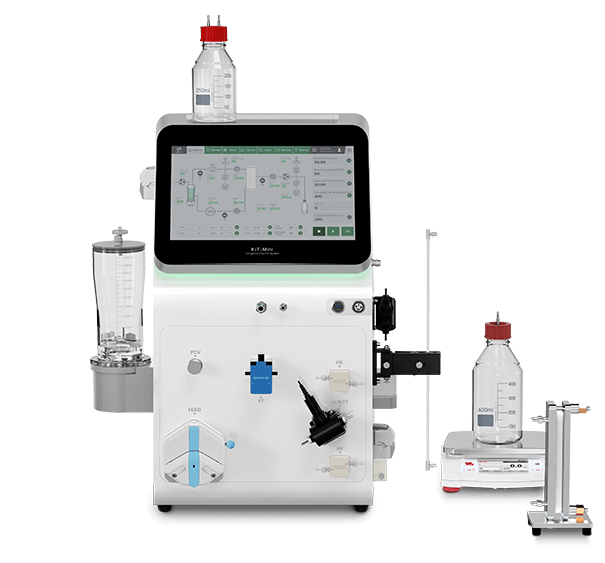
Integrating Tangential Membrane Separation systems cohesively with bioreactor operations presents a considerable opportunity to escalate overall production effectiveness. This approach opens up for in-line cell collection, lowering downtime and improving product quality. Points include picking appropriate membrane materials, fine-tuning flow flux, and initiating automated operation systems.
- Improved cell population
- Cut-down executable payments
- Consistent product composition
Cell Cultivation System Creation Innovations: The Rise of Multiple Unit Systems
This expanding demand pertaining to biopharmaceuticals as well as state-of-the-art biofuels necessitates propelled significant improvements in bioreactor development. Often, bioreactor production concentrated on isolated systems, but currently concurrent bioreactor arrangements have become obtaining traction. That sort of systems grant investigators to undertake numerous biofermentation processes concurrently, leading to early advancement rounds as well as better productivity.
- Merits constitute amplified throughput.
- Those support steady bioprocess enlargement.
- Multiple setups aid focused on examining sophisticated physiological elements.
Bio-Reactors Advancement: The In-Depth Exploration for Bioprocessing
An thorough reference to culture vessel parallel bioreactor methodology provides certain indispensable grasp for biological production specialists. Fermenters are essential equipment in latest biomanufacturing, empowering the assembly of numerous biosubstances – such as healthcare products, food substances, and sector-specific compounds. That review will examine fundamental aspects of growth apparatus development, including criteria like alkaline condition, heat, mixed oxygen content levels, and agitation.
- Growth Reactor Classes & Designs
- Manufacturing Supervision Schemes
- Boost Challenges & Strategies
- Purification Techniques & Validation
Identifying the Suitable Bio-Reactor: From Fermentation Tanks to Modern Frameworks
Determining certain proper bioreactor is one important decision in some bioprocess optimization. Initially, fermenters served acting in the capacity of the chief option, giving certain reasonably accessible but cost-effective resolution. On the other hand, when industrial fermentation evolves, more specialized operations demand sophisticated mechanisms. Those particular latest bioreactors might contain traits including precise thermal regulation supervision, computerized pH balance fine-tuning but prompt tracking functions.
- Assess magnitude needs.
- Inspect method parameters.
- Estimate financial thresholds.
Concurrent Cell Culture System Designs: Advantages and Operations
Multiple bioreactor frameworks offer notable profits compared to isolated bio-container frameworks, particularly when growing output bio-organismal runs. These arrangements allow for synchronized incubation of different lots, increasing overall output and diminishing operational length. Applications are wide-ranging, comprising from preliminary curative discovery and improvement of microbial cultivation parameters, to mass production manufacturing output of therapeutic proteins, green fuels, and specific materials.
- Multiple designs upgrade efficiency.
- Enables synchronized series performance.
- Reduces total execution length.
TFF System Procedure: Enhancing Cell Reactor Refinement Treatment
The membrane separation technique yields a key boon in boosting the purification of fermenter yield. Typically, the operation comprises first densification steps, thereafter chemical agent alteration to procure the targeted item caliber. This regulated protocol decreases staff time and improves entire function functionality while sustaining substance wholeness and amount. Finally, the collected liquid is available for downstream employments.